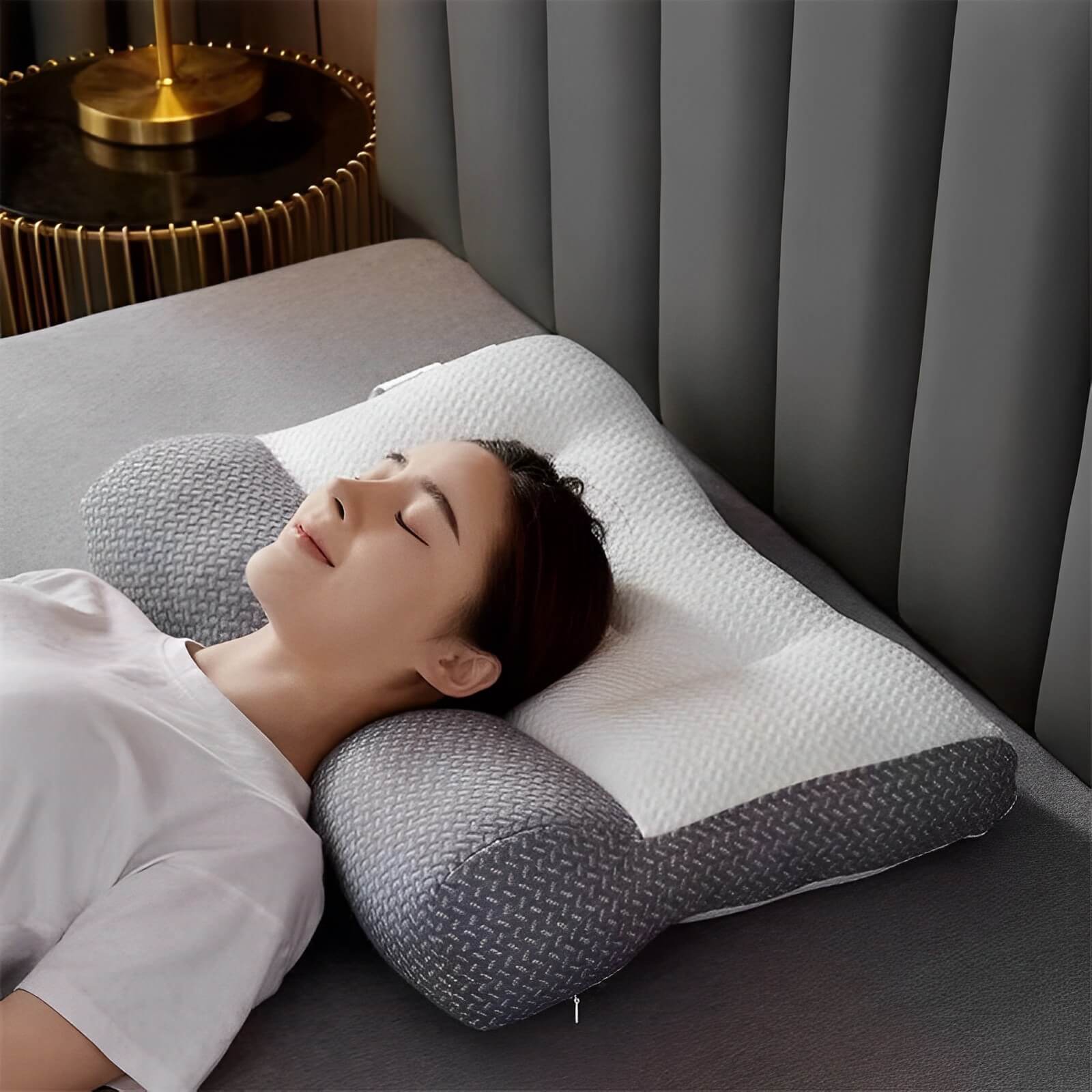
The Silent Culprit: Why Your Pillow Matters for Neck Pain
Waking up with a stiff neck, throbbing headache, or even radiating pain down your arm is a frustratingly common experience. For many, the culprit isn't a sudden injury but something far more insidious: an unsupportive pillow. Your cervical spine, the seven delicate vertebrae that bear the full weight of your head, spends 6 to 8 hours each night in whatever posture your pillow dictates. A poor choice in loft or material can force your neck into sustained, unnatural positions – leading to compression of cervical structures and the very discomfort you're trying to escape. An optimal neck support pillow isn't just about softness; it's a vital tool for maintaining proper spinal alignment, alleviating pressure, and ensuring restorative sleep. Finding the right one involves understanding a few critical factors: pillow loft (height), material properties, pressure distribution, and temperature regulation. Ignoring these can perpetuate a cycle of pain, while addressing them can transform your mornings.Decoding Pillow Loft: The Foundation of Cervical Alignment
The single most crucial specification for a neck support pillow, particularly for those experiencing pain, is its loft or height. This measurement directly impacts how well your pillow fills the unique gap between your head, neck, and mattress, ensuring your spine remains in a neutral, aligned position.The Critical Loft for Every Sleep Position
Your primary sleep position is the ultimate guide to determining your ideal pillow loft. Without this alignment, you risk compressing nerve pathways and straining muscles, leading to stiffness and pain.-
Side Sleepers: 4-6 inches.
If you sleep on your side, your pillow needs to be thick enough to fill the significant gap between your ear and your shoulder. This ensures your head stays level with your spine, preventing your neck from drooping downwards (too low) or being pushed upwards (too high). Broad-shouldered individuals often need a pillow on the higher end of this range.
-
Back Sleepers: 3-4 inches.
For back sleepers, the goal is to support the natural inward curve of your cervical spine without pushing your chin toward your chest. A medium loft cradles the neck's natural 'C' shape, keeping the head gently aligned with the rest of your spine. Too flat a pillow can leave your neck unsupported, while one that's too high can hyperextend it.
-
Stomach Sleepers: 0-2 inches.
Sleeping on your stomach is generally discouraged by sleep experts due to the extreme twisting and hyperextension it often imposes on the neck. If it's your unavoidable preference, however, you need a very low loft pillow, or even none at all, to minimize the strain. A flatter pillow prevents your head from being pushed too far back, which can severely compress the cervical spine.
It's worth noting that if a pillow brand doesn't clearly discuss loft height in relation to different sleep positions, it’s a strong indicator that the pillow hasn't been designed with genuine cervical alignment support in mind. For a deeper dive into matching your pillow to your sleep style, check out our guide on Stop Neck Pain: Choosing the Right Pillow for Your Sleep Style.
Beyond Initial Loft: The Importance of Consistency
An ideal neck support pillow doesn't just start at the right height; it *stays* at the right height throughout the night. This is where "compression set" comes into play. A pillow that feels perfect when you lie down but collapses to half its thickness by 3 AM provides inconsistent cervical support when you need it most. Traditional down pillows, for example, are famously soft but tend to compress significantly under head weight. Loose fill pillows, like those with shredded memory foam or buckwheat, can bunch unevenly, creating lumps and valleys that disrupt alignment. In contrast, materials like solid latex and memory foam are known for their ability to maintain consistent loft, providing steady support through all your sleep cycles. Hybrid designs, which often feature a structural core (like microcoils) wrapped in a comfort layer (like down or foam), are engineered to offer the best of both worlds: robust loft maintenance combined with surface pressure relief. Always evaluate a pillow's loft consistency, not just its initial fluff.Material Matters: Balancing Support, Pressure Relief, and Comfort
The fill material of your neck support pillow dictates its feel, durability, and most importantly, its ability to conform and support. Each material comes with its own set of advantages and considerations.Memory Foam: Contouring Support with Caveats
High-density memory foam is a popular choice for neck support due to its excellent conforming properties. It molds precisely to the contours of your head and neck, distributing pressure evenly and maintaining consistent loft. However, traditional memory foam has a well-known drawback: heat retention. It can sleep 3-5 degrees warmer than other materials, and increased body heat can lead to heightened muscle tension. If you opt for memory foam, prioritize advanced designs like gel-infused, open-cell, or graphite-infused constructions, often paired with phase-change covers, to mitigate heat buildup. Shredded memory foam offers more adjustability but can sometimes clump.Latex: Resilient, Hypoallergenic Support
Hybrid Designs: The Best of Both Worlds?
Hybrid pillows are engineered to combine the strengths of different materials. A common configuration includes a supportive core – often made of dense foam or microcoils – enveloped by softer, more conforming layers like down, shredded memory foam, or latex. This construction delivers the structural support needed to maintain consistent loft while the outer layers provide plush comfort and pressure relief. These often excel at accommodating position changes while retaining alignment.Other Fills: Down, Feather, and Buckwheat
- Down and Feather: Luxuriously soft and moldable, down pillows can be shaped to fit your neck. However, as noted, they are prone to significant compression, requiring frequent fluffing to restore loft, and they may not provide firm enough support for severe neck pain.
- Buckwheat and Millet: These natural fills offer firm, customizable support. You can add or remove hulls to adjust loft and firmness. They are breathable but can be heavy and make a rustling sound with movement, which some find disruptive.